Thursday, December 6, 2018

Digital Financial Services - A Powerful Lever to Reduce Poverty and Achieve the SDGs

Mark Suzman is President of Global Policy & Advocacy and Chief Strategy Officer at the Bill & Melinda Gates Foundation. You may follow him on Twitter @MSuzman.

It seems counterintuitive, but the poorer people are, the more complex their financial lives. Relatively speaking, they also pay a significantly higher percentage of their total income for financial services than people at higher levels of the economic pyramid.

About 80 percent of the world’s poor are cut off from even the most basic services provided by banks and other financial service providers. As a result, they are forced to rely on a cash-based system that is expensive, risky, and inefficient.

The poor pay astronomical fees and interest rates to couriers, moneylenders, and other informal providers. If you are a poor worker trying to share cash wages with your family back home, you have to pay a steep transaction fee with every transfer. Globally, the average fee is around 8 percent, but in some places it is much higher—nearly 17 percent when sending money from South Africa, for example. If you are cheated or robbed, there is little recourse. Often, remittances sent to relatives are in cash-carried by friends or bus drivers across hundreds of miles.

If your savings are in the form of jewelry or livestock, you can’t use them to pay for your child’s exam fee or medical bills. Even paying a bill can be time consuming—it might mean traveling all day just to get to the appropriate office. There is also the emotional stress of constantly calculating whether you are going to have enough to feed your family tonight and tomorrow night.

If the world is going to help the poorest people lift themselves out of poverty, they need convenient, low-cost financial services that help them protect and use their financial assets effectively, deal with irregular cash flow, and provide a cushion for financial emergencies.
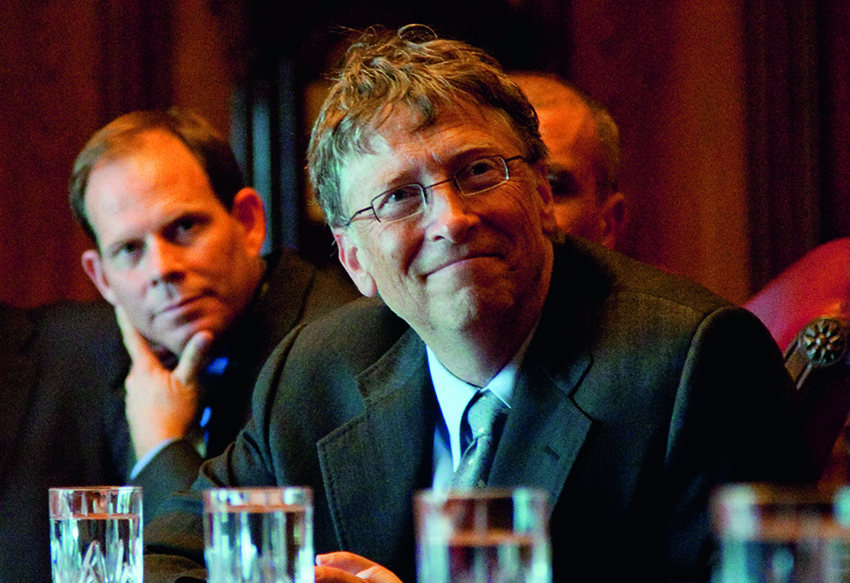
Mark Suzman and Bill Gates / Photo: Bill & Melinda Gates Foundation

The Benefits of Digital Financial Services

Digital financial services can do this. As mobile phones and cellular-signal coverage have become ubiquitous, universal financial inclusion has become a realistic proposition for the first time in history.

Going digital can cut transaction costs by 90 percent, which changes the fundamental economics of financial services for the poor.

Digitization will for the first time allow poorer people to participate fully in the financial system. It offers the private sector a fantastic opportunity to develop innovative products and services for a vast new market. There are major benefits for government as well.

Just as the introduction of credit and debit cards stimulated trillions of dollars of revenue and created hundreds of thousands of jobs worldwide, digital financial services can unlock the market potential of those currently trapped in the informal economy: the so-called fortune at the bottom of the economic pyramid.

In fact, the transformation has already begun. Because so many people in developing countries have mobile phones, tens of millions of people are storing money digitally on their phones and using their mobile devices to make purchases as if they were debit cards.

Forward-thinking policymakers and private sector collaboration have made this even easier by creating interoperability among mobile network operators and these mobile wallets.

In Kenya, three quarters of adults now have access to a bank account—up from 42 percent in 2011. Mobile banking services are so popular there that traditional banks have begun to offer competing services, which are driving down costs and further increasing access.

While this is great progress, it is not enough to simply declare victory with the opening of a bank account. The real measure of success has to be consistently high usage, super low transaction fees, and innovative digital financial products and services that people want and will use.

What follows are some of the more successful examples.

Leading banks in Tanzania and Kenya are partnering with the humanitarian organization CARE to deliver digital financial services to more than five million members of village savings and loans associations—three quarters of whom are women. These are people that have traditionally been excluded from formal financial services. Initial reports show that participating women are saving more, have more control over their financial resources, and are more likely to start a business.

New digital financial services are helping farmers ride out irregular harvests that would once have spelled disaster. In Kenya, a micro-insurance scheme makes automatic payments to farmers when there is either a drought or excessive rainfall.

Women who use Kenya’s leading mobile money service, M-Pesa, can now borrow funds from family or friends through a simple text message. This avoids the usurious rates charged by some moneylenders, which can range from 10 to 25 percent per month, and even higher in some countries.

Although the digital financial economy is taking shape first in low- and middle-income countries, it will eventually trickle up to high-income countries. When it does, transactions that used to require a trip to the bank, piles of paperwork, and the interventions of several bank employees, will be completed with the touch of a key on a mobile phone.

All these transactions will be easily traceable, gradually building a solid financial history for everyone, making it easier for financial service providers to make decisions about a person’s credit-worthiness while protecting the overall stability of an economy.

A digital financial connection also creates a platform to target and improve government services. Today, if a government wants to give subsidies to its citizens, it has to physically deliver money or resources such as fertilizer or kerosene. Existing processes require the traversing of many layers of bureaucracy, where these resources can easily get lost, diverted, or wasted.

Instant financial transfers using mobile phones will make it possible for government subsidies to reach more of the right people more quickly, and at a much lower cost. Mexico has already saved $1.3 billion by digitizing government payments for wages, pensions, and social transfers.

A Common-Sense Approach to Policymaking

To realize the full potential of digital financial services, governments will need to have the right policies in place. In many countries, regulations meant to keep risk out of the financial system also keep poor people out of the financial system. These regulations also stifle innovations that can stimulate new opportunities.

Telecommunications companies, for example, already work with billions of mobile phone subscribers, so they are well positioned to be part of the financial inclusion ecosystem. The same is true for other non-bank entities; yet in many countries they aren’t allowed to provide any financial services at all.

In search of the right balance, some regulators are exploring alternatives that let new players enter the market while maintaining standards of security. For instance, the Reserve Bank of India recently authorized 11 “payments banks” whose customers will be able to use their mobile phones to perform basic, relatively risk-free financial transactions like deposits, payments, and transfers.

Similarly, every country has “Know Your Customer” (KYC) rules, which—reasonably so—require bank customers to be able to prove they are who they claim to be. Most poor people, however, cannot do this easily. Often they don’t have the documents they need and can’t get them. Some don’t even have ID cards. This doesn’t, however, lessen their need for safe, inexpensive financial services.

The Financial Action Task Force (FATF), a multinational body that sets international standards to combat money laundering and the financing of terrorism, supports a risk-based approach to match the level of documentation to the level of risk associated with a transaction. Some countries like Mexico are already applying a tiered approach.

But most countries and financial institutions don’t have enough clarity about how much flexibility or discretion they have when assessing $100 transactions versus $10,000 transfers.

The result is that cross border flows—remittances, correspondent banking, and humanitarian aid—are being shut down, forcing capital to flow instead through an informal economy that is both unsafe and inefficient.

In fact, some efforts aimed at combating money laundering and terrorism financing are having the opposite effect than was intended. Financial flows are going underground, making them less transparent and slowing the ability of countries to bring citizens and small businesses into the formal financial system.

Everyone benefits from an economy that includes everyone, and it is infinitely safer to have people in the system than out of it.

Global agendas like the G20 are increasing the opportunities digital financial services can enable. For instance, the recent Turkish G20 presidency highlighted linkages between digital financial services and women’s economic empowerment, and the Chinese G20 presidency is also looking at the potential of technology-enabled financial inclusion.

This momentum—and the growing number of international bodies making efforts to provide clarity around de-risking and other regulatory barriers—is encouraging. For instance, the American government hosted its first-ever financial inclusion forum in December 2015. A diverse panel of leaders from government, the private sector, and civil society—including Queen Maxima of the Netherlands, the CEO of JP Morgan, Mexico’s Minister of Finance, and Bill Gates—urged policymakers to communicate clear expectations regarding de-risking so that other countries don’t have to try to second-guess American regulatory and law enforcement behavior and reactions.

The United States, acting together with other countries, can lead the way in modernizing the global financial architecture and capacity for financial inclusion. This can be done in a way that doesn’t add risk to the system, but actually contributes to economic development, financial sector stability, and greater global security overall.

Moreover, there are direct benefits to governments as well. Governments facing fiscal constraints can improve the efficiency of government services and make the best use of limited resources by digitizing bulk payments, such as pensions, wages, and social transfers.

And, as the global community responds to the refugee crisis and future natural disasters, it can employ digital financial delivery channels to speed up humanitarian aid and directly reach particularly vulnerable populations, especially women.

Financial Inclusion and the SDGs

As the world ramps up efforts to begin implementing the new Sustainable Development Goals that form the core of the UN 2030 Agenda for Sustainable Development, financial inclusion—especially via digital financial solutions—can be an important tool to help countries achieve their targets. There is supporting academic evidence that it can play an important role in Goals 1 through 5, as well as Goal 8.

Let me briefly address each of the aforementioned Goals in turn and show how, through tangible examples, this is achievable in practice.

Goal 1: End poverty. In India, an effort to set up accounts for the rural poor reduced the rate of rural poverty by approximately 15 percentage points.

Goal 2: End hunger. Malawian farmers whose earnings were directly deposited into a new bank account increased land cultivation by 5 percent and input expenditures by 10 percent. Their yields were up to 10 percent higher.

Goal 3: Ensure healthy lives. When Argentina moved payments for a large national social program from cash to accounts, kickbacks virtually disappeared.

Goal 4: Ensure availability and equitable quality education. Nepal saw a 20 percent increase in education expenditures for households that opened free banks accounts.

Goal 5: Achieve gender equality. According to an FAO estimate, if women had the same access to financial and other productive resources as men, they could increase yields on their farms by 20 to 30 percent.

Goal 8: Economic growth. A recent study indicates that use of mobile phones to access financial services is spurring economic growth in African economies.

Making a Real Difference

Studies show that broader access to, and participation in, the financial system can boost business and job creation, increase investments in education, and directly help people to manage risk and absorb financial shocks.
The world has the technologies and the know-how to do it. What is needed now are policies and regulations that are clear, that encourage competition, and that enable financial and technology innovation.

Digital financial services can help transform the economies of sub-Saharan Africa and South Asia. Especially in rural and remote communities—where traditional bank branches and accounts have long been impractical—digital inclusion can provide millions of people with the opportunity to access and use safe and secure payment, savings, insurance, and credit services. People will be able to send remittances swiftly to loved ones a thousand miles away, with the certainty that it will reach them and without having to pay outrageous transaction fees. They will also be able to more easily save money for emergencies and the future.

These advances—though seemingly small to those of us long accustomed to bank accounts and credit cards—have the potential to truly create a more inclusive global economy that benefits us all. 

Accountable Leadership - The Key to Africa’s Successful Transformation

Landry Signé is Distinguished Fellow at Stanford University’s Center for African Studies, Chairman of the Global Network for Africa’s Prosperity, Professor of Political Science at the University of Alaska Anchorage, an Archbishop Tutu Fellow, and a Young Global Leader of the World Economic Forum.

Despite half a century of political independence, Africa remains the continent that is facing the most complex economic, political, and social challenges in the globalized world. Notwithstanding some progress, success stories, and variations of results from one country to another, citizens’ expectations are broadly unfulfilled. The results of consecutive Afrobarometer surveys are telling: high dissatisfaction of citizens towards their leadership. Numerous national initiatives—but also regional ones, such as the Lagos Plan of Action for the Economic Development of Africa, the New Partnership for Africa’s Development, the African Union, and the defunct Organization for African Unity—have thus far not improved the continent’s competitiveness in a globalized world to a satisfactory level. During the anti-colonial struggle, self-determination and indigenous leadership were presented as the solutions to Africa’s challenges. Unfortunately, Africa’s “leadership” has far too often become a tool of disservice to the majority of Africans.

This essay addresses the “leadership” challenge, presents possible solutions, and discusses the role of young leaders in transformational leadership accountability for an economically, politically, and socially more competitive continent. Accountability is explored here in five dimensions: personal, horizontal, peer, vertical, and diagonal.

The Problem

From the scramble for Africa at the time of the Berlin Conference in the mid-1880s until about 60 years ago, most African countries were under colonial rule, dominated by European colonizers such as the British, French, Belgians, Portuguese, Germans, Spanish, and Italians. Despite variations between direct and indirect rule, settler-based and exploitative colonies, colonial rule was politically oppressive, economically extractive and exploitative, and socially repressive and exclusive. Colonial administrations put in place a series of authoritarian institutions backed by security forces that disregarded local voices and lacked popular legitimacy. They mostly aimed at controlling the territory, dominating the population, exploiting the resources, and protecting the interests of both the ruling class and the mother country.

Leaps of Faith? - Addressing the Challenges of Sustainable Development and Climate Change

Hardeep Singh Puri is Vice President of the International Peace Institute and the Secretary-General of the Independent Commission on Multilateralism. He was previously India’s Permanent Representative to the United Nations in New York.Jimena Leiva-Roesch is Policy Analyst at the International Peace Institute. You may follow them on Twitter @HardeepSPuri and @jlr502, respectively.

Never measure the height of a mountain until you have reached the top.
Then you will see how low it was.
– Dag Hammarskjöld

The year 2015 was, in retrospect, a good year for multilateral diplomacy. The 2030 Agenda for Sustainable Development and the Paris Agreement on Climate Change were adopted with great fanfare. A year ago these two outcomes would have appeared unlikely. The cynics among us thought that the ‘good old days’ of multilateralism were truly over. These two results, however, have reinvigorated traction in the United Nations and reveal that it can be made to chart a constructive course to address the major challenges of the twenty-first century. This at the very least constitutes a win for multilateral diplomacy.

The 2030 Agenda and the Paris Agreement were conceived and saw the light of day in troubled times. Just two weeks before the COP21 climate change conference, France was struck by the worst terrorist attacks in its recent history. While delegations prepared to finalize the Paris accords, world leaders picked up arms to fight an enemy that cannot be defeated with arms. An ideology cannot be bombed.

In 2015, the core values for which the UN stands were tested as never before. Shortsighted policies and lack of leadership were on display. These resulted in protracted crises and greater instability in several regions of the world.

Syria, Yemen, and Libya are cases in point where we have failed to deliver and protect fundamental freedoms and rights—the very cornerstone of the United Nations’ raison d’être. Humanitarian agencies have not been able to cope with an increasing number of crises that ultimately require political solutions based on consensus-building.
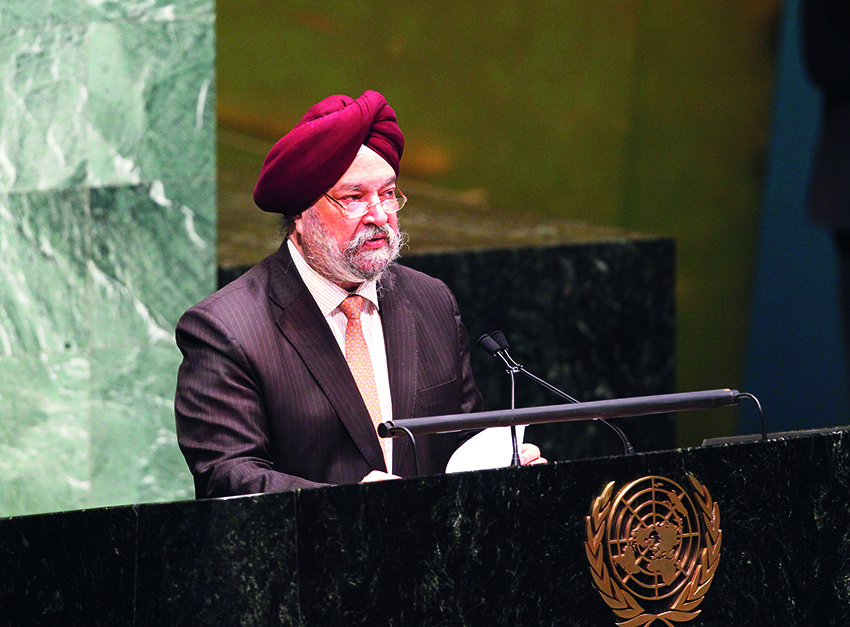
Ambassador Puri addressing the UN General Assembly / Photo: United Nations

During the United Nations Development Summit held in September 2015 in New York, world leaders adopted a new world vision embedded in the 2030 Agenda. At the same time, and on the sidelines of the Summit, the United Nations refugee agency (UNHCR) and the International Organization of Migration (IOM) were sounding the alarm that we have reached the highest number of displaced peoples ever recorded—until 2015, these massive movements had only been seen in the immediate wake of World War II.

Clearly, the UN stands at a crossroads in its 70th anniversary. On the one hand, it was able to forge a shared manifesto on sustainable development, while on the other, it is facing a number of multilayered crises, posing serious new challenges to peace and security.

The Challenge of Climate Change

Climate change presents a formidable challenge even for seasoned negotiators. In this case, the real enemy is of our own making. Fortunately, Pope Francis has been a leading voice in defining the criticality of the issue. His encyclical on climate change and inequality has made a significant impact even beyond his natural sphere of influence. He has linked the phenomenon of climate change to poverty and inequality.

Pope Francis’s message to the UN General Assembly was defiant of the status quo. As he put it in his September 2015 address at the United Nations:

Economic and social exclusion is a complete denial of human fraternity and a grave offence against human rights and the environment. The poorest are those who suffer most

from such offences, for three serious reasons: they are cast off by society, forced to live off what is discarded and suffer unjustly from the abuse of the environment. They are part of today’s widespread and quietly growing ‘culture of waste.’

Climate change requires a different kind of multilateral cooperation. It cannot be subdued by sending troops to the frontline but rather by changing current patterns of consumption and production, transforming lifestyles, the core of the energy matrix, and food production. A significant transformation in the way society functions—individually and collectively—is needed to avoid the worst scenarios predicted by science.

The Paris Agreement

In a standing ovation that lasted several minutes, the Paris Agreement on Climate Change was adopted on the eve of December 12th, 2015. French President François Hollande exclaimed at the end of the COP21 conference: in Paris there have been many revolutions over the centuries. Today, it is the most beautiful and most peaceful revolution that has just been accomplished—a revolution on climate change.

After the disastrous consequences of the 2009 Copenhagen COP15 climate conference, the meeting in Paris simply had to succeed. It was the last chance to reassure ourselves that the multilateral system could agree unanimously on a universal framework on climate change. However, COP21 was not just about saving-face against difficult odds.

The French managed to keep ambition high in the text by deciding to limit global average temperature increases to below two degrees Celsius, and by establishing a mechanism that is designed to increase the ambition of national targets progressively over time. Moreover, by the end of the conference, 186 countries—all the major economies as well as those that contribute the least—had presented their “Intended Nationally Determined Contribution,” with the intention to reduce greenhouse gases beyond 2020. The fact that all countries were ready to present a reduction of emissions at the negotiation table was the catalyzer of the Paris negotiations.

Yet, for the Paris Agreement to work, the political momentum that characterized the final days in Paris needs to be sustained over a long period of time, even after the current set of world leaders are no longer in office. This is a tall order. Experience has shown that the enthusiasm of governments wanes fast. For the Paris Agreement to stand the test of time, it will need a titanic effort—particularly from civil society—to hold governments accountable to what they have committed.

The Design of the Paris Agreement

One of the biggest difficulties in the negotiations leading to Paris was the design of a new framework without the firewall between developed and developing countries, while still recognizing differentiation of responsibility and capacity between all the gradients of developed to developing countries to the least developed countries.

Emissions from emerging economies have surpassed many in the developed world at a rapid rate. Diseases from air pollution and other negative impacts have raised concern domestically, pressing for the needed transformation.

The bilateral deals made prior to Paris paved the way for the global agreement. The joint announcements between the major emitters—the United States and China—had a significant impact. They agreed on what would constitute their post-2020 actions on climate change, paving the way for attaining consensus on a global level, but also defining the rules of the new climate architecture.

During COP21, U.S. Secretary of State John Kerry confessed that the United States “had learned the lessons of the past” when it had tried to ratify the Kyoto Protocol and failed. The United States opted for an agreement in which “every country on Earth has its own set of national circumstances to consider, its own politics, its own economy, its own capabilities.”

The position of the United States has been consistent throughout a number of years. Since 2007, the United States has stated that the new agreement needed to be “flexible” and “global.” It argued that developed countries could not foot the bill alone.

The Kyoto Protocol had the famous ‘firewall’ between developed and developing countries—only developed countries had “quantified economy-wide emissions targets.” The Kyoto Protocol was based on the fact that developed countries were responsible for emissions during the last 150 years of industrial activity.

Moreover, even while the international community moved towards the desired flexible design, the U.S. Congress and the Supreme Court appear to be blocking progress. In the midst of COP21, the U.S. Congress chose to approve two measures that would limit “heat-trapping carbon emissions from existing and future coal-fired power plants.”

The Paris Agreement took responsibility off the shoulders of developed countries. It is based on a “bottom-up approach,” with each country setting its own emission targets through national plans. Moreover, the quantified goal on finance is not part of the legal component either: it only appears in the decision text. These were all trade-offs made in the end to obtain consensus.

The contradiction between what was approved internationally and what countries are doing at home is not a gap; it is an abyss. This abyss exists not only in the United States, but throughout the world. What is being done under the flag of development is still increasing greenhouse gas emissions—inaugurating coal plants in many parts of the globe and the replacement of large extensions of forests by monocultures—just to cite two glaring examples. These contradictions could make the Paris achievements, and those of us who believe in the multilateral track, look silly; it could also make the Paris climate agreement look like a charade, as the most cynical have called it.

In order for the Paris Agreement to stand the test of time, ambitious action to address this global challenge requires world powers to change mindsets. Established policies for rapid economic growth have to be re-designed to meet the test of longterm sustainable development. A “win-win” situation between growth and sustainability needs to become the norm. This is a particularly challenging goal for emerging economies that are at the tipping point of growth.

Consider in this context the recent speech made by Indian Prime Minister Narendra Modi, on the occasion of the 70th anniversary of the Economic and Social Council (ECOSOC). He said that “we in the developing world not only have to end poverty and hunger and satisfy the legitimate aspirations of our people for a better life; we have to do so in a manner that is friendly to the planet and the environment.” He also underlined the immense responsibility that developed countries have in shifting their “economies onto a sustainable path, follow sustainable lifestyles, and assist developing countries with finance and technologies.”

The 2030 Agenda

On September 25th, 2015, the UN’s 193 member states adopted the 2030 Agenda for Sustainable Development. It is the most ambitious development plan ever adopted by the UN and its member states. This new framework includes a set of 17 Sustainable Development Goals that range from poverty eradication and reducing inequality to promoting peaceful and inclusive societies and addressing climate change.

The question that immediately springs to mind is whether we—states, civil society and international organizations—are prepared to address the daunting scale, complexity, and ambition of the new Agenda. Can the 2030 Agenda address some of the emerging peace and security challenges?

The 2030 Agenda calls for a new mindset. It envisions three paradigm shifts that some would call “leaps of faith.” However, if these are achieved, the UN would come of age in the twenty-first century. The three transformative shifts in the 2030 Agenda are: universal application; systemic integration; and peace as a centerpiece.

First, universal application. The negotiation of the 2030 Agenda included all nations of the world and received the views of over eight million people. This inclusive process has led to a universal approach. Implementation is expected in all countries—a very big leap. Developed countries had previously had the principal role of being donors. They were considered the model of progress. The Global North is also called upon to implement, measure, and report on the 17 Sustainable Development Goals.

The universality framework should be a model used to tackle peace and security challenges that are interconnected, such as the world drug problem. The outcome to be adopted during the forthcoming Special Session of the General Assembly in April 2016 should focus not only on countries that are suppliers, but also where demand lies.

The second transformative shift is systematic integration. The 2030 Agenda calls for a new mindset, by way of integration instead of compartmentalization: the SDGs are an integrated framework. Its design has managed to overcome the problems posed by the ‘siloed’ structure of the multilateral system. For example, Goal 1 covers poverty eradication in all its dimensions: it goes beyond economic scarcity and addresses what it means to lift someone out of poverty in terms of health benefits, political empowerment, social inclusion, and safety conditions.

The SDGs break with the compartmentalization of the UN by looking at the individual and society holistically. In order to implement the 2030 Agenda, it would be erroneous to break the integrated nature of the framework only to adapt it to the UN’s current modus operandi and structures, some of which are clearly outdated. The UN appears to be exerting serious efforts to put its own house in order.

The third transformative shift is peace. Peace is at the core of the 2030 Agenda: the omission of peace in the Millennium Development Goals (MDGs) was a glaring mistake. Since the UN structure is typically organized in silos, the peace and security dimension was considered, in the context of the MDGs, as inappropriate for inclusion, even though the Millennium Declaration contains several references to peace.

The link between peace and development is not new: in 1987, the Brundtland Commission concluded that environmental stress is a driver and a result of political tensions and conflict. Then-UN Secretary-General Boutros Boutros-Ghali’s 1992 “Agenda for Peace” explicitly asserted that there can be no peace without development and, equally, that there can be no development without peace.

The 2030 Agenda goes a step further, by including a stand-alone goal (Goal 16) on “peaceful and inclusive societies” as an operational component-and not simply as rhetoric. Targets under Goal 16—such as “reducing all forms of violence and related deaths” and “substantially reducing corruption and bribery”—are to be monitored and reported. Issues of governance that used to be considered beyond public and international scrutiny now form part of the development framework.

The concept of peace in the 2030 Agenda is not defined by the mere absence of conflict. In a much more ambitious formulation, it but is based on two additional principles: inclusion and prevention.

Prevention means addressing underlying, often longterm systemic issues instead of a list of symptoms. We cannot forget that the ultimate objective of the UN Charter is to “prevent succeeding generations from the scourge of war.”

Indeed, the Sustainable Development Goals address several known root causes of conflict, such as rising inequality; social, economic, and political exclusion; and the lack of governance of natural resources. It seems that over the past few years the international community has grown accustomed to managing crises rather than addressing its underlying causes and stopping a crisis from emerging in the first place.

To quote the great Indian statesman Jawaharlal Nehru: “the first thing to remember and to strive for is to avoid a situation getting worse and finally leading to a major conflict, which means the destruction of all the values one holds.”

According to the latest UN Secretary-General’s Plan of Action to Prevent Violent Extremism, violent extremists have recruited over 30,000 foreign terrorist fighters from over 100 member states to travel to Syria, Iraq, Libya, Yemen, and Afghanistan. One of the main drivers is a deep sense of alienation from the current establishment—of being excluded—whose sense of “participation” manifests itself through these physical acts of violence. The focus of the 2030 Agenda is on building “peaceful and inclusive societies;” if implemented, it may counteract the current sense of alienation that is driving this phenomenon.

Leadership is the most important ingredient to transform the three leaps of faith describe above into reality.

Implementation of the 2030 Agenda and the Paris Agreement

One of the major criticisms of the 2030 Agenda is that it did not sufficiently highlight the plight of refugees and displaced peoples. Yet, if one looks closely at the entirety of the SDG framework, there is a firm commitment to “leave no one behind.” Thus, the current refugee crisis should be seen as one of the first tests of implementation of the 2030 Agenda.

To implement the outcomes it has achieved, the UN must strengthen its capacity to engage with local and international partners, particularly non-state actors. This requires an emphasis on greater cooperation with regional and sub-regional organizations, civil society actors, and the private sector. Most importantly, it must engage its citizens in the solutions. As an example, India’s Green Revolution of the 1960s achieved great results by increasing crop yields. However, it had also led to soil erosion, water pollution, disease, and the elimination of biodiversity. The climate change revolution cannot afford a repetition of the same mistakes. The way policies are implemented needs to change. India’s green revolution was a top-down approach that paid little regard to the knowledge of farmers and community-based agriculture.

The Intergovernmental Panel on Climate Change has stated that industrial agriculture is among the top sources of greenhouse gas emissions. The world’s population is estimated to increase by more than 10 billion by the end of the twenty-first century. It will be tempting to increase food yields as we have done in the past. Yet the Earth’s ecosystem will not be able to sustain this.

In the implementation of national climate plans and the 2030 Agenda’s policies—which have a dedicated goal on sustainable agriculture—that empower farmers and support existing knowledge of seeds and soil through innovation and collaboration will need to be formulated.

The response to climate change in the twenty-first century—now that we have the Paris Agreement and the 2030 Agenda—must follow a more humble and ingenious path, one in which people, communities at the bottom, are empowered and engaged in the solution.

No More Silos

The United Nations has comfortably operated in silos for the last 70 years. The UN Charter and the structures of the UN revolve around pillars, which partly explains the fragmentation and silos that exist today. The lack of coordination between the main intergovernmental bodies (i.e. the General Assembly, the Security Council, and ECOSOC) has hindered progress.

Moreover, the governance structure of the United Nations remains stuck with an institutional framework designed for the twentieth century, whilst is now called upon to address the challenges of the twenty-first. In order to live up to the vision of the Sustainable Development Goals, profound systemic issues need to be addressed: from reinforcing the UN’s operational activities to Security Council reform and the revitalization of the General Assembly. The reform of the Bretton Woods Institutions is also part of the overhaul needed.

On the horizon for 2016, the UN will have to make difficult choices. It will have to press on with reforms to its 1945 structure or give up and remain trapped in the old century. There are some positive signs that the UN is taking necessary steps to retrofit its system, two of which can be mentioned as part of this essay’s concluding section.

The first is the process of electing the next Secretary-General, which has started to move in the right direction. member states have requested more transparency and a greater role for the General Assembly. The election of the new chief can be a positive force to reinvigorate the UN system.

The second is a series of independent reviews that are currently taking place and which are tasked with assessing the overall health of our multilateral system. This includes the Independent Commission on Multilateralism, which will publish its report in the second half of 2016.

When historians look back at the 70th anniversary of the United Nations, it will be remembered, hopefully, as a renaissance in global affairs rather than an episode of missed opportunities.

In his address to the General Assembly this year, Prime Minister Modi chose to quote the Mahatma: “One must care about the world one will not see.” There can be no better dictum to guide us through this period of reform, revitalization, and renewal. 

Africa in the First Quarter of the Twenty-First Century

Olusegun Obasanjo is a former President of the Federal Republic of Nigeria. You may follow him on Twitter @SegunObasanjo.

Both the Arabs, who sought to expand caliphates, and the Europeans, who scrambled for the continent, beheld Africa as a vast place with a large number of people who cannot help themselves unless they are helped. The recurring picture of Africa’s helplessness continued for decades, inviting tears in the eyes and dampening of the heart. The beauty of Africa, the valor of its people, and its culture were all consigned to miniscule import.
The Arab traders did not discover Africa when they ventured to the north for commerce; neither did the Europeans when the French conquered Algiers in 1830. Napoleon’s expedition to Egypt in 1790 was not what suddenly brought the knowledge of Africa. The continent had existed in a different form long before the adventures of these powerful explorers. It may have been a discovery to them because they were unaware of African peoples until their explorations, yet Africa has always been there.
No doubt, it would be appreciated that no full account of the African situation is possible without due reference to the impact of colonialism. As we are all aware, colonialism devastated and depopulated the continent through the transatlantic slave trade. Africa suffered at the hands of foreigners like no other continent. It is virtually impossible to estimate the full social, economic, and psychological costs of this inhuman and inhumane act—from its conception in the dark hearts of Europeans to its forceful implementation. The passage of time cannot remove the stain and the stench of the slave trade.
As the campaign for independence from colonial occupation and management of the African continent resonated across the globe, colonial hegemony was not totally wiped out in the area of trade and economy. The wave of independence that spread across Africa was short-lived. Renegade militaries and militias erupted from different parts of the continent; and civil war became the order of the day.
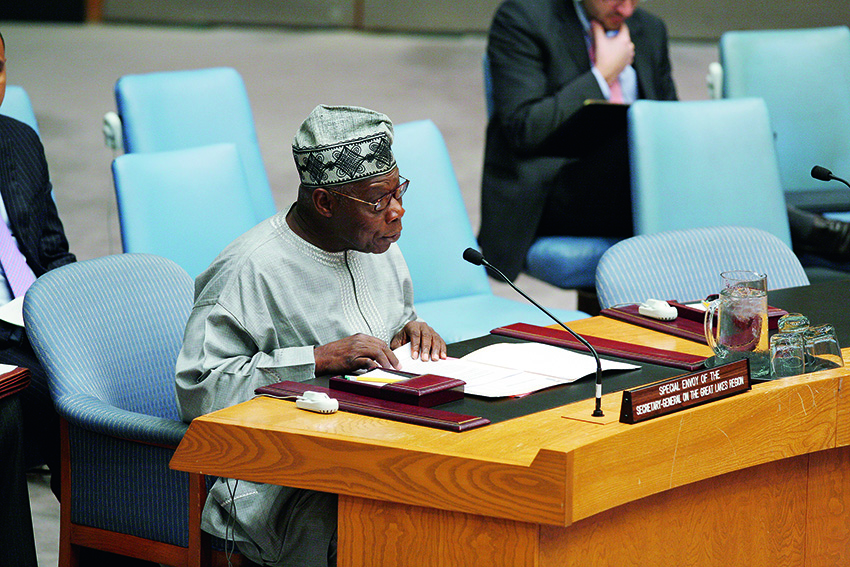
President Obasanjo addressing the UN Security Council / Photo: United Nations
The Cold War made things worse for Africa and hindered development to a great extent. Both sides of the divide oppressed and exploited Africa. We received a lot of weapons, but no factories; no schools or hospitals; we got nothing to show for alliance or association with either the East or the West.
We fought wars for others and came home with nothing. We fought each other even as the same source fed us with dangerous weapons, and we got pain, disease, hunger, and devastation in return. We were issued loans, some dubious, others used to acquire weapons; and we ended up in debt and with instability that gave us only more pains, coups and counter-coups, and bad governance.
Some of the worst dictators in the world emerged from Africa with the full endorsement and encouragement of outside influences. Jean Bédel Bokassa of the Central African Republic was a typical example. All these, fuelled by the usual self-serving interests of external forces, made colonialism look better; it made slavery and subjugation appear a worthy alternative.

Africapitalism and Africa’s Sustainable Development

Tony O. Elumelu is Chairman of Heirs Holdings, the United Bank for Africa, and Transcorp. He is also Founder of the Tony Elumelu Foundation. You may follow him on Twitter @TonyOElumelu.


Africa’s rise is real, but not assured. While many critical economic indicators—increasing gross domestic product, increasing real income per capita and increased labor market participation rates—have been recorded over the last 15 years, fundamental challenges remain. Chief among these, across the entire continent, is a seeming lack of economic resilience to withstand commodity price shocks.

Amidst much talk of “potential,” Africa still has the highest incidence of poverty and the slowest rate of poverty decline. Population growth has exceeded poverty reduction. Inequality rates remain high—about 415 million people in sub-Saharan Africa live in poverty. Amongst what is labeled as Africa’s middle-class (i.e., those earning between $2 and $20 per day), 60 percent make up the ‘floating class’ (i.e., those earning between $2 and $4 per day), with the danger of relapsing into poverty.

This must change if there is to be sustainable and inclusive broad-based development in Africa.

We all know that African economies have been largely defined by extractive activity—oil and gas, minerals, and a variety of precious metals. The continent’s extractive industries often export raw materials elsewhere for processing, which means the “real” value of those resources is often realized outside of Africa. This lack of value addition to African resources is at the heart of the continent’s failure to thrive, and the vicious cycle of “boom” when commodity prices rise only to “slump” at the end of a commodity price boom. The real question for Africa and its leaders is: how do we change this?

I believe it is essential that we have a more thorough and open debate about Africa’s economies and how to make them more resilient and move away from the shortterm feel-good narrative with comforting headlines such as “Africa is home to seven of the 10 fastest growing economies in the world.” In order to help Africa grow sustainably, we must better understand its challenges and address them in a fundamental and holistic manner. Suffice it to say that to do otherwise would be to shy away from dealing with some critical issues.
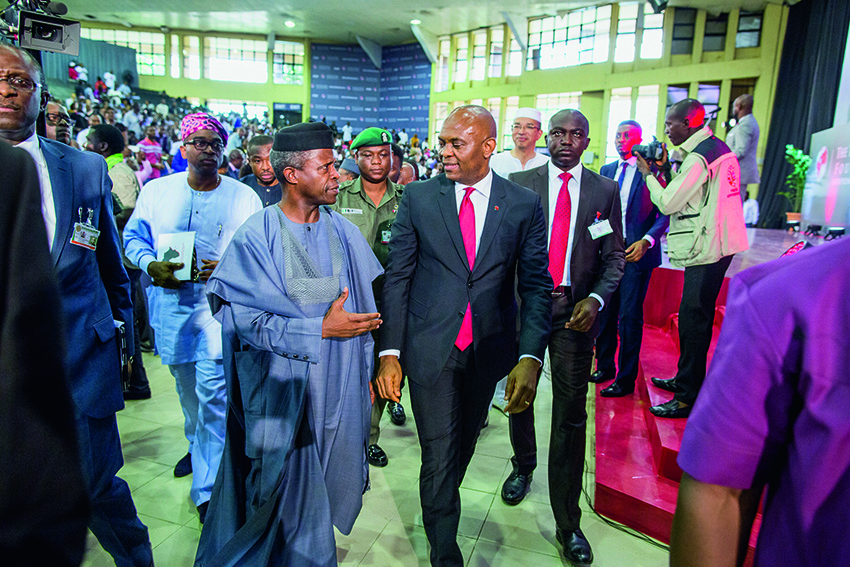
Tony Elumelu / Photo: Heirs Holdings Ltd.
The starkest example of a serious looming challenge that should be turned into an opportunity is Africa’s demographic dividend. More than 200 million young Africans will enter the workforce by 2030. Africa is home to about 617 million young people of working age, and this number is expected to rise to 1.6 billion by 2060, effectively turning Africa into the world’s largest workforce.

Good News 

Africa’s pool of labor has the potential to be a force for transformative growth across the continent. This can only be accomplished with a deliberate, comprehensive effort to create millions of new jobs and employment opportunities to accommodate these new entrants to the labor force in their millions.

The potential of an increasing population is in its human capital. The private and public sectors can turn this population surge into a rising and energetic generation that can be used to spur innovation and development on the continent.

The key to successfully addressing the employment challenge in particular is to ensure that African economies create more value locally. This means, for example, that rather than merely extracting natural resources and exporting them as commodities to countries outside of Africa that process, refine, and add “value,” Africa must build the capacity to add value to its natural resources itself. This would enable Africa to reap more of the benefits, including generating the local economic activity that drives job creation, builds and sustains supply chains, and fosters a more holistic economic ecosystem.

Africapitalism

Africa is capitalism’s final frontier, and as such it offers boundless economic opportunities that could solve many of the continent’s most pressing social challenges. Longterm investment that creates economic profits, which can be recycled into Africa’s economic ecosystem, as well as social wealth, sits at the core of Africapitalism. It is a private sector approach to solving some of Africa’s most intractable development problems.

Africapitalism is an economic philosophy that embodies the private sector’s commitment to transform Africa’s economy through longterm investments that generate both long-lasting economic prosperity and social wealth for all Africans.

Africapitalism presents a different model from that which relies solely on government to manage markets and provide basic social services, as the public sector alone cannot be relied upon to develop Africa. Rather, it exhorts a new Africa emerging from the activities of a reinvigorated private sector, solving social problems by building businesses and creating social wealth.

In addition to creating jobs, attracting more investment, building local value chains, innovating new products and services, generating tax revenues, and creating positive economic spillovers, Africapitalism can also help address inequality.

However, in order to attain Africapitalism’s goal of creating greater economic opportunity and social wealth, Africa’s private sector must transition from short-term, rent-seeking economic activities towards a longterm entrepreneurial approach. Government policies must lend support to an entrepreneurship culture—entrepreneurship that is indeed solving social problems and adding value to Africans. It is this kind of support from government that makes for a robust private sector and allows government to play its proper role as an enabler of growth and development.

In Africa, the goal of economic development will not be addressed by growth alone. For decades, even in Africa’s fastest growing economies, growth has had less of an effect on poverty than in Latin America and the Caribbean, emerging Europe, and Central Asia.

The major reason is that, to date, the growth process has not been inclusive. Growth has not been driven by longterm investments that add value domestically, but rather by the export of raw commodities at continually increasing prices. According to the 2011 African Economic Outlook, “Growth needs to be associated with employment creation because employment is the main channel through which growth affects poverty.”

Nearly 80 percent of countries with economies dependent upon extractives have per capita income levels below the global average. Many of these nations also face significant challenges in energy, agriculture, environment, waste, transport, and basic infrastructure.

Six Key Africapitalism Sectors

Let’s take a look at six key critical sectors for the sustained development of Africa which resonate with the Africapitalism philosophy.

The first key sector is energy. Given the severe energy scarcity in Africa (only 26 percent of the population of sub-Saharan Africa has access to electricity), investments by enterprises in sustainable energy priorities, such as energy efficiency, energy access, and cleaner sources of energy, will be key to supporting Africa’s sustainable development. Investments in energy projects, co-generation, and enhancing energy efficiency will not only make commercial and industrial operations less vulnerable to power fluctuations and shortages, but will also enhance overall financial viability.

The second is waste. Businesses around the world are discovering ‘wealth-in-wastes.’ The private sector in Africa should lead the way in exploiting the potential of recycling and waste management that could lead to the creation of entirely new industries. Business enterprises need to look beyond business-as-usual models and use technologies creatively in order to generate wealth and move towards low carbon pathways.

The third key sector is transport. Transportation costs increase the prices of African goods by 75 percent, which diminishes their competitiveness. As more of Africa’s natural resources are developed, and as the population grows significantly, there are tremendous opportunities for investment in transportation infrastructure, including in roads, ports, rail, airports, and mass transit.

The fourth is environment. A dozen major African cities will see their populations increase by 50 percent between 2010 and 2025, and the continent is projected to be 70 percent urbanized by 2050. The private sector can contribute to the development of new smart urban centers through public private partnerships (PPPs), implementing new low carbon technologies, and developing low carbon pathways for urbanization in Africa. As the UN Agenda 2030 makes abundantly clear, economic growth and sustainable development are not zero-sum games.

The fifth key sector is agriculture. Agriculture employs 65 percent of Africa’s labor force and accounts for 32 percent of gross domestic product. In addition, over 60 percent of the world’s arable land is located on the continent. With the lowest farm yields in the world, there is a tremendous amount of value to be captured through the development of medium- to large-scale farming and mechanization in order to increase productivity dramatically.

In the agriculture sector, in addition to financing, purchasing, and supporting improvements in the cocoa crop for export, a new trade framework should run the gamut of the value chain and include support for opportunities in the storage, transportation, processing, manufacturing, and packaging of value-added chocolate, which Africa currently imports in large quantities.

And the sixth is value chains. Value chains offer an opportunity for Africa to build dynamic manufacturing sectors by processing its natural resources—from agricultural products and minerals, to oil and natural gas. For example, Mtanga Foods, a commercial agricultural business in which I inve­sted in Tanzania, serves the full value chain of its operation, focusing on the production, processing, distribution, and retailing of beef, other meat products, and seed potatoes. Mtanga’s operation introduced the first new varieties of seed potatoes in Tanzania in over three decades, supplying over 150,000 farmers, transferring know-how and technology to the Tanzanian Ministry of Agriculture, opening up the sector to new entrants, and creating jobs for local farmers, smallholder seed multipliers, and distributors.

Entrepreneurship

More than 200 million young Africans will enter the workforce by 2030, and the current rates of job creation will not be able to absorb them all. This makes the case for the promotion of entrepreneurship—and particularly for policies that will create an enabling environment for entrepreneurs to thrive—overwhelming. Not only does entrepreneurship empower individuals to find and pursue opportunities to improve their economic circumstances, it also expresses Africa’s ability to find solutions to its economic problems at the micro level.

Enterprise development is fundamental to poverty alleviation, job creation, economic growth, strengthened technical skills and capacity, and overall sustainable economic development for the continent. Deliberate policy focus, training, and incentives in the SME space will enable entrepreneurs to thrive; achieve financial security; accumulate wealth, create jobs and incomes in their communities; generate tax revenues for governments; and catalyze a range of multiplier effects—ranging from food security and improved nutrition, to better access to healthcare and education for future generations.

It is encouraging to see the new wave of creative and confident young entrepreneurs that has emerged in Africa, developing innovative start-ups in areas such as the environment, health, and skills development.

I am so resolute in my belief in the role of enterprise and SMEs in Africa’s transformation that, through the Tony Elumelu Entrepreneurship Programme, I have begun to invest $100 million over a ten-year period to identify, mentor, train, and seed 10,000 African start-ups. The first 1,000-representing 51 African countries-have already completed their training and received their first tranche of seed capital, and they are poised to produce the next generation of transformative business leaders. There are millions more aspiring African entrepreneurs who deserve a chance, if only governments would prioritize support for entrepreneurship.

In high-income countries, SMEs account for more than 60 percent of both employment and GDP; in low-income countries, they account for nearly 80 percent of employment but less than 20 percent of GDP. As a result, whether entrepreneurs start their businesses because they cannot find jobs (“necessity entrepreneurship”) or because they see market opportunities (“opportunity entrepreneurship”), helping them grow is a development imperative.

For large companies, enterprise development is also a business imperative. It strengthens the value chain by increasing quality, quantity, and security, while potentially decreasing costs on the supply side and increasing sales capacity on the distribution side. It expands the market by driving job creation and GDP growth, and enhances corporate reputations by contributing to local, national, and global priorities.

Just as enterprise development is critical to large firms, large firms are critical to enterprise development. They can support entrepreneurs through corporate social investment in start-up capital, basic business skills, mentoring, and networking with peers and potential customers.

However, large firms increasingly realize that, when it comes to supporting entrepreneurs, their comparative advantage is not social investment, but rather demand for goods and services from startups and SMEs within their core business operations and value chains—demand that creates the business opportunities entrepreneurs need to grow. To help them take advantage of these opportunities, many large firms adjust their procurement policies and practices and provide small-scale suppliers, distributors, and retailers with information, training, technology, and other capacity-building resources.

Africa’s public sector leaders will need to take more proactive measures to tackle lingering issues in areas such as reliable and functional infrastructure, taxation, skills development, and corporate governance that often hinder start-up organizations operating in non-traditional sectors. African governments must also use incentives and other mechanisms to ensure that micro, small and medium-sized enterprises (MSMEs) and labor-intensive activities can thrive alongside large firms in both traditional and new areas of their economies.

A New African Story

Africa offers tremendous opportunity that is still largely untapped by Africans and the rest of the world. For me, I will continue to increase my investments across Africa and keep empowering young African entrepreneurs so that we may develop Africa in concert.

I look forward to a new African story, where Africa’s private sector works alongside African governments to grow domestic value-adding industries, thereby underpinning the development that Africa needs. The results of such a partnership must and will deliver massive job creation, as well as technological advancement, innovation and, most importantly, a rebalancing of the unequal exchange of cheap raw materials for expensive finished goods that has put Africa at a perennial disadvantage.